Salmon Spinach Pasta Dish: Delicious & Nutritious Delight
I stumbled upon the idea for this Salmon Spinach Pasta Dish during a night out at a cozy little Italian restaurant. It was one of those meals that struck just the right chord; the creamy sauce, tender salmon, and vibrant spinach danced together on my palate. I was instantly hooked and thought, “I can make this at home!” But let’s be real, I’m always on the lookout for ways to save some cash while enjoying restaurant-worthy dishes in my own kitchen. Plus, there’s something incredibly satisfying about making your favorite meals even better than what you find when dining out.
After a few less-than-stellar attempts—seriously, there were pasta disasters that would make you cringe—I finally nailed it after about five tries. I was determined to get the balance of flavors just right and to achieve that creamy texture without it turning into a gloopy mess. Each iteration had me tweaking ingredients and proportions while muttering to myself about “this is definitely gonna be the one” (spoiler: it wasn’t always). But hey, practice makes perfect, right? And I was convinced that my version of this dish needed to shine like the star it is meant to be!
Let me tell you, all those trials paid off! The final result is nothing short of a culinary hug—creamy, rich, and bursting with flavor from the salmon and fresh spinach. It’s got that delightful contrast between the tender pasta and flaky fish that’ll make your taste buds sing. This Salmon Spinach Pasta Dish: A Delicious and Nutritious Recipe to Try Today is not just an easy weeknight meal; it’s a wholesome feast that feels indulgent yet guilt-free. So grab your apron, and let’s get cooking—you won’t regret diving into this delicious creation!
These Salmon Spinach Pasta Dish are….
…a culinary masterpiece that will transform your weeknight dinners into something truly special!
1. They deliver an incredible depth of flavor with a creamy, tangy sauce that perfectly complements the rich salmon. The combination of heavy cream and freshly squeezed lemon juice creates a luxurious coating that enhances the natural flavors of the fish and spinach, making each bite a delight for your taste buds.
2. Perfectly balanced texture – tender fettuccine mingles with juicy chunks of salmon and vibrant spinach for a satisfying mouthfeel. The softness of the pasta contrasts beautifully with the flaky salmon, while the spinach adds a tender yet slightly crisp element, making this dish not just delicious but also enjoyable to eat.
3. A key technique I employ is lightly sautéing the garlic and onions before adding them to the sauce. This step unlocks their aromatic potential, infusing the dish with a savory base that elevates the overall flavor profile. Plus, it’s an easy way to incorporate a depth of flavor without any complicated steps!
4. Exceptional value – this Salmon Spinach Pasta Dish is not only simple to make at home but also a cost-effective alternative to dining out. With ingredients you can easily find at your local grocery store, you can whip up this nutritious meal for a fraction of the price you’d pay for a similar dish in restaurants.
PS This recipe serves about 4 generous portions, perfect for family dinners or meal prep for busy weekdays!
Ingredients for the Salmon Spinach Pasta Dish
Each ingredient in this dish plays an essential role in flavor and texture. Here’s what you’ll need:
12 oz fettuccine (or any pasta of choice): Serves as the hearty base that holds everything together.
1 lb salmon fillet (skinless): Provides a rich, buttery flavor and flaky texture.
4 cups fresh spinach (washed and chopped): Adds vibrant color and a nutritious boost to the dish.
2 cloves garlic (minced): Infuses the sauce with aromatic depth and warmth.
1 medium onion (diced): Offers sweetness and a savory foundation for the sauce.
1 cup heavy cream (or half-and-half): Creates a luscious, creamy texture that binds all flavors.
1/2 cup parmesan cheese (grated): Contributes a sharp, nutty flavor that enhances the sauce.
1 tbsp olive oil (for cooking): Aids in sautéing while adding richness and depth.
1 tsp lemon juice (freshly squeezed): Brightens the dish and balances the creaminess with acidity.
1 tsp salt (to taste): Essential for enhancing all the natural flavors of the ingredients.
- 1/2 tsp black pepper (to taste): Adds a subtle kick that rounds out the flavor profile.
You Must Cook the Pasta to Al Dente. No Shortcuts!
I know, I know — cooking pasta perfectly al dente sounds like a minor detail, but trust me when I say it can make or break your Salmon Spinach Pasta Dish. I tried to shortcut this step by cooking the pasta just a minute less than the package instructions, and let’s just say I regretted it deeply when my sauce didn’t cling and my dish turned into a mushy mess. 🙈
Here’s the scoop: cooking pasta al dente means it’s firm to the bite, which helps it hold its shape and texture when you toss it with that creamy sauce later on. Think of it like baking cookies — if you don’t pull them out at just the right time, they turn into dry little hockey pucks instead of chewy delights. It’s all about timing here, and with pasta, you definitely want to nail that perfect texture for this dish.
What does cooking pasta to al dente do?
- Texture — Al dente pasta has a firm bite that provides contrast to the tender salmon and wilted spinach, creating a satisfying mouthfeel.
- Flavor absorption — The slight firmness allows the pasta to absorb the creamy sauce better without becoming overly soggy, enhancing each savory bite.
- Visual appeal — Perfectly cooked fettuccine maintains its shape and looks beautiful against the vibrant greens and rich sauce, making your dish more inviting.
- Digestibility — Pasta cooked al dente is easier on your stomach because it retains more starch; this means a gentler impact on your digestion.
- Cooking balance — When tossed with hot ingredients like salmon and sautéed vegetables, al dente pasta will continue cooking slightly without losing its structure or turning mushy.
Different cooking times for pasta
- 6 minutes (good) — Slightly undercooked; more chew than desired but still somewhat acceptable in a pinch.
- 8 minutes (best) — Right where you want it! Perfectly al dente, ready to soak up that luscious sauce without losing its shape.
- 10 minutes (soft) — Starting to lose its integrity; sauce won’t cling as well, leading to a less satisfying dish.
- 12 minutes (mushy) — Overcooked disaster! The fettuccine will collapse under the weight of the sauce and salmon, turning your meal into a soupy mess.
Be warned: overcooking your pasta is an easy mistake to make! It might look good at first glance, but trust me—once it’s mushy, there’s no going back. Keep an eye on that timer and taste as you go!
How to make Salmon Spinach Pasta Dish
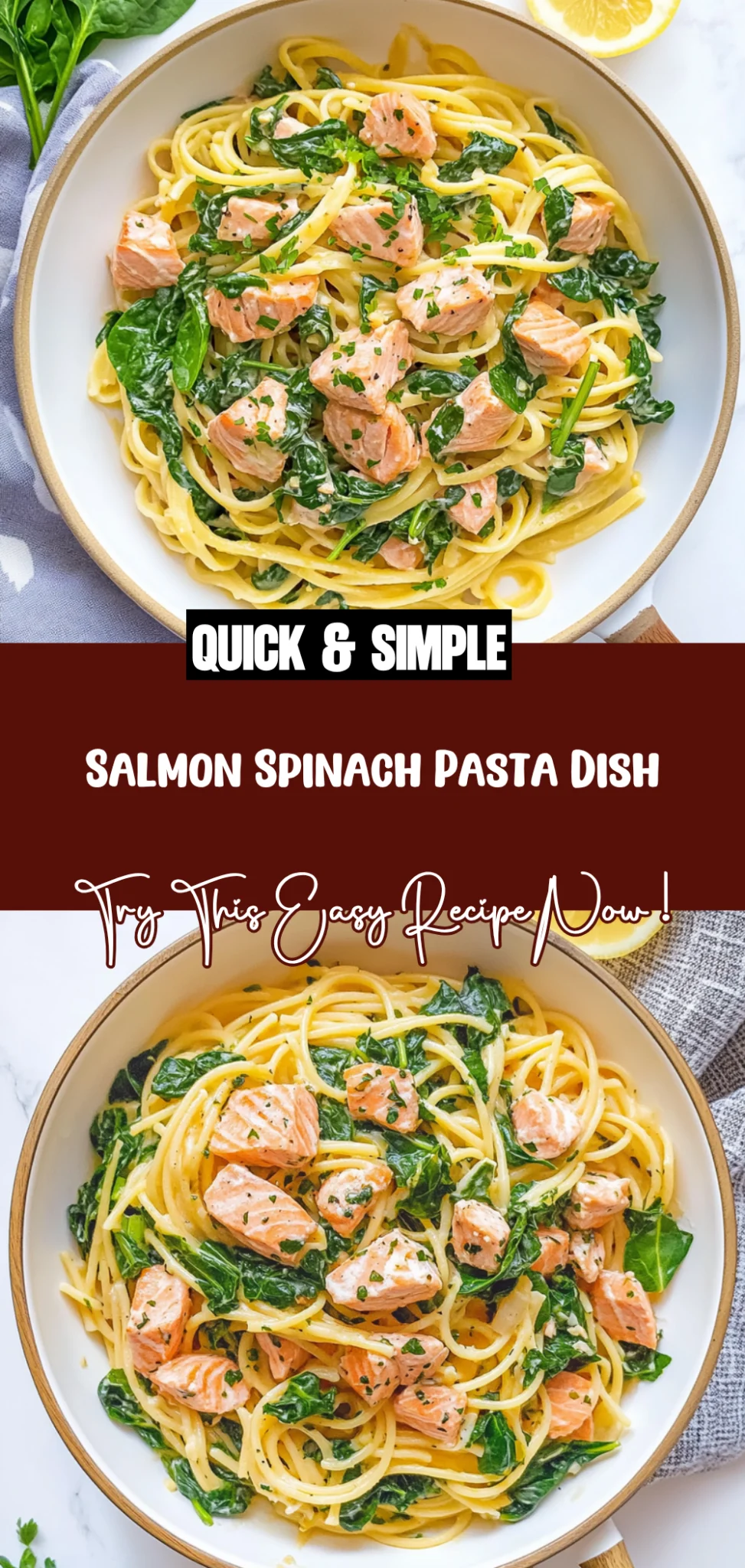
Are you ready to see how straightforward it is to make the Salmon Spinach Pasta Dish of your dreams??
1. COOK THE PASTA
Get your pasta perfectly al dente for the best texture!
Bold action label: Bring – In a large pot, bring salted water to a boil over high heat. It should be bubbling vigorously to ensure the pasta cooks evenly.
Bold action label: Add – Once boiling, add the fettuccine and cook according to package instructions until al dente, usually around 8-10 minutes. You want it firm but tender, so taste a piece before draining!
Bold action label: Drain – Carefully drain the pasta in a colander and set aside, making sure not to rinse it. This helps the sauce cling better later!
HANDY TIPS
- 💡 TIP: For extra flavor, add a tablespoon of olive oil or a pinch of salt to the boiling water!
- 💡 TIP: If you’re using whole wheat or gluten-free pasta, cooking times may vary, so keep an eye on them.
2. PREPARE THE SALMON
This step brings an amazing protein boost to your dish!
Bold action label: Heat – In a skillet over medium heat, add 1 tablespoon of olive oil and let it warm up for about a minute. You want it hot enough so that the salmon sizzles upon contact.
Bold action label: Season – Season the skinless salmon fillet generously with salt and pepper on both sides. This enhances its natural flavor beautifully!
Bold action label: Cook – Place the salmon in the skillet and cook for about 4-5 minutes on each side or until it’s cooked through and flakes easily with a fork. Keep an eye on it; you want it golden brown!
Bold action label: Remove – Take the salmon out of the skillet and let it cool slightly before flaking it into bite-sized pieces with a fork.
HANDY TIPS
- ⚠️ IMPORTANT: Undercooked salmon can be unsafe; ensure it’s fully opaque when you remove it from the skillet.
- 💡 TIP: Save any fond (the brown bits) left in the pan for added flavor in your sauce!
3. SAUTÉ THE VEGETABLES
Now comes the fragrant part that adds freshness!
Bold action label: Add – In the same skillet used for salmon, add diced onion and minced garlic. Sauté for about 2-3 minutes until the onion turns translucent and fragrant—this is where all those flavors start coming together!
Bold action label: Stir in – Next, toss in the chopped spinach and cook until wilted, which takes just another minute or two. Watch as that vibrant green begins to soften!
HANDY TIPS
- 💡 TIP: If you prefer your spinach less wilted, add it right at the end before combining everything; this keeps its bright color!
- 💡 TIP: Mixing different greens like arugula can give an interesting flavor twist!
4. MAKE THE SAUCE
This creamy sauce ties everything together beautifully!
Bold action label: Pour – Pour in 1 cup of heavy cream into the skillet with sautéed vegetables and bring it to a gentle simmer over medium heat. This should take about 1-2 minutes—watch closely for bubbling around the edges!
Bold action label: Stir in – Add in ½ cup of grated parmesan cheese and 1 teaspoon of freshly squeezed lemon juice while stirring gently until melted and creamy—this will create a luscious sauce coating everything perfectly!
HANDY TIPS
- ❓ Why does this matter? The cream thickens slightly as it heats up, creating that perfect velvety texture.
- 💡 TIP: For added depth, consider adding a pinch of nutmeg when stirring in your cheese!
5. COMBINE AND SERVE
The grand finale where all elements unite into deliciousness!
Bold action label: Toss – Add your drained pasta and flaked salmon into the skillet with sauce. Toss everything together gently until well combined—make sure each piece of pasta is coated evenly!
Bold action label: Adjust seasoning – Taste your dish; now’s the time to adjust seasoning with salt and pepper as needed before serving hot.
Make these once, and I wager they will invade your dreams every night too! – Nagi x
FAQ – Salmon Spinach Pasta Dish
❓ How long will leftovers keep in the fridge?
Leftovers of this Salmon Spinach Pasta dish can be stored in an airtight container in the refrigerator for up to 3 days. However, I recommend consuming it within the first 2 days for the best flavor and texture. After day 3, you might find that the pasta becomes mushy and the salmon may lose its freshness, making it about 85% as good on day 3. Always give it a sniff test before diving back in!
⏳ Can I skip cooking the pasta al dente?
No, you really shouldn’t skip this step! Cooking pasta to al dente is crucial because it holds up better when mixed with the creamy sauce and salmon. If you overcook it, you risk having a mushy texture that doesn’t pair well with the dish. Trust me, I’ve tested this recipe multiple times, and getting that perfect al dente texture makes all the difference!
❄️ Can I freeze this Salmon Spinach Pasta dish?
Yes, you can freeze this dish! To do so, let it cool completely before transferring it to a freezer-safe container. It should stay fresh for up to 2 months. When you’re ready to eat, thaw it in the refrigerator overnight and reheat gently on the stove or in the microwave. Just keep in mind that cream-based sauces can sometimes separate when frozen, but a quick stir while reheating usually fixes that!
🌾 Is there a gluten-free option for this recipe?
Absolutely! You can easily make this dish gluten-free by substituting regular fettuccine with gluten-free pasta such as rice or chickpea noodles. Just ensure you follow package instructions for cooking times since gluten-free pasta can vary significantly in texture and cook time compared to traditional options.
🥛 Can I substitute heavy cream with something lighter?
If you want a lighter option, you can use half-and-half instead of heavy cream; however, if you’re looking for a dairy-free alternative, coconut cream works surprisingly well too! Just remember that using coconut cream will impart a slight coconut flavor to your sauce. For an even lighter version, consider using unsweetened almond milk or cashew cream—though both will yield a less creamy consistency.
🔄 What are some good add-ins or variations for this dish?
Feel free to customize this recipe according to your taste preferences! You could add sun-dried tomatoes for a burst of flavor or toss in some capers for a briny kick. Fresh herbs like dill or parsley also enhance the freshness of salmon beautifully. If you’re feeling adventurous, consider adding some red pepper flakes for heat—just adjust according to your spice tolerance!
🐟 How do I know when my salmon is cooked perfectly?
The ideal cooked salmon should flake easily with a fork but still appear moist inside. Aim for an internal temperature of 145°F (63°C). If you’re unsure, using a meat thermometer is always reliable! I’ve made my fair share of dry salmon mistakes—trust me when I say keeping it tender is key!
Troubleshooting
I will continue to add more to this Troubleshooting section as I start seeing questions coming through from people who have made the recipe.
Troubleshooting tips
“My pasta came out overcooked and mushy! 😭”
- You might have cooked the fettuccine for too long. If you don’t follow the package instructions closely, especially with timing, the pasta can turn mushy.
- It’s also possible that your water wasn’t at a rolling boil when you added the pasta, leading to uneven cooking.
I bet it was still YUM though!
“My sauce was too thick and not creamy enough! 😩”
- This could be because you used too much parmesan cheese, which can thicken the sauce excessively. Be sure to measure carefully next time!
- Another reason could be that you simmered the heavy cream too long before adding cheese, causing it to reduce too much.
I bet it was still YUM though!
“The salmon turned out dry and flaky! 😢”
- If you cooked the salmon for more than about 4-5 minutes on each side, it may have dried out. Salmon is best when it’s just cooked through but still moist.
- Additionally, if your skillet was too hot, it could have caused the salmon to cook too quickly on the outside while remaining undercooked inside.
I bet it was still YUM though!
“My spinach didn’t wilt properly and was tough! 🤔”
- If you added the spinach too late or didn’t give it enough time in the skillet, it might not have had a chance to soften properly. Aim for about 1-2 minutes until wilted.
- Also, using older spinach can lead to tougher leaves that don’t wilt as nicely, so always check for freshness!
I bet it was still YUM though!
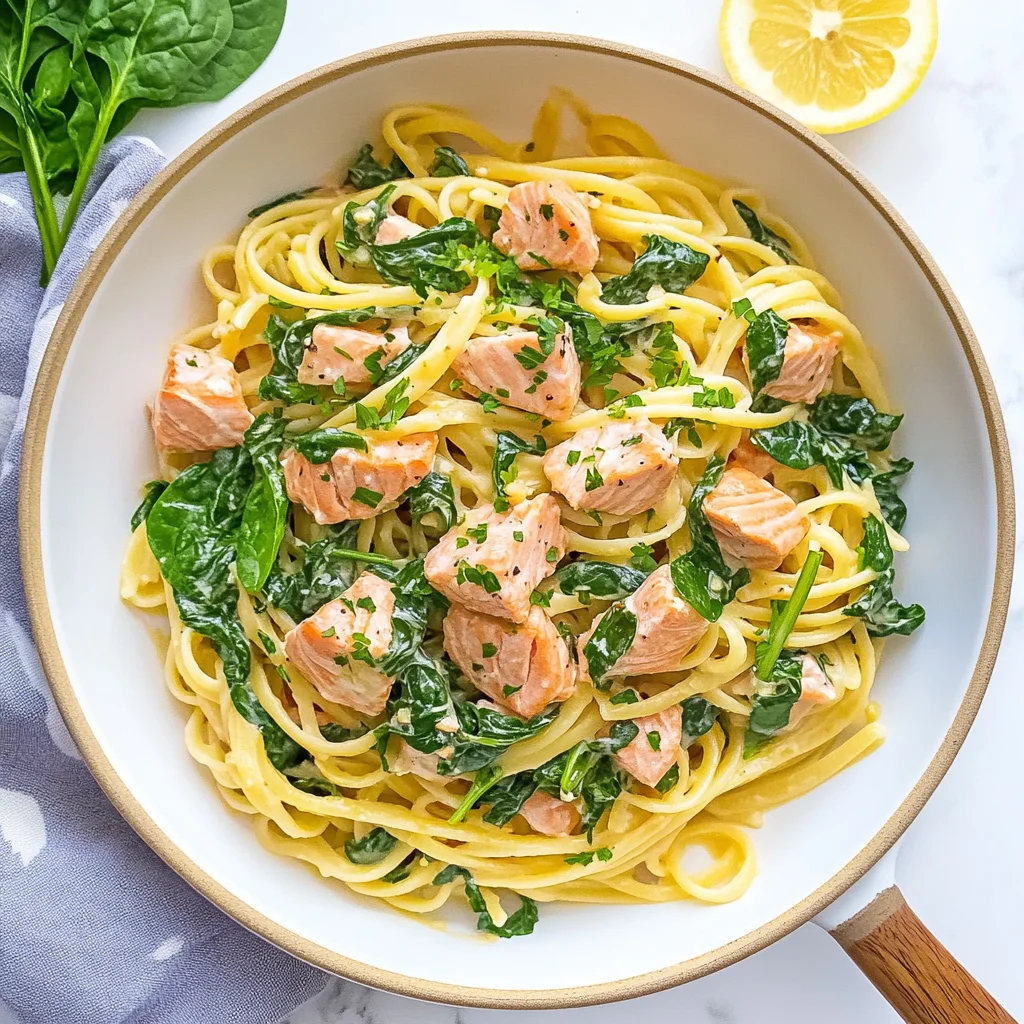
Salmon Spinach Pasta Dish
Ingredients
Method
- In a large pot, bring salted water to a boil. Add the fettuccine and cook according to package instructions until al dente. Drain and set aside.
- In a skillet, heat olive oil over medium heat. Season the salmon fillet with salt and pepper, then add to the skillet. Cook for about 4-5 minutes on each side, or until cooked through. Remove from skillet and flake into pieces.
- In the same skillet, add diced onion and minced garlic. Sauté for 2-3 minutes until the onion is translucent. Add the chopped spinach and cook until wilted.
- Pour in the heavy cream and bring to a simmer. Stir in the parmesan cheese and lemon juice. Mix until the cheese is melted and the sauce is creamy.
- Add the cooked pasta and flaked salmon to the skillet. Toss everything together until well combined. Adjust seasoning with salt and pepper as needed. Serve hot.