Best Jambalaya Recipe for Mardi Gras: Flavor Explosion Aw…
I’ll never forget the first time I had jambalaya that truly knocked my socks off. It was at this little hole-in-the-wall place in New Orleans, where the air was thick with the smell of spices and the sound of jazz floated through the open windows. I was instantly hooked by the vibrant colors and layers of flavor in every bite, a perfect blend of shrimp, sausage, and chicken that felt like a warm hug. After returning home, I found myself craving that dish on a regular basis, but let’s be real—there’s no way I could afford to fly back to NOLA every time! So, I decided to take matters into my own hands and recreate what I now consider the Best Jambalaya Recipe for Mardi Gras right in my kitchen.
Let me tell you, perfecting this recipe wasn’t exactly a walk in the park. I must’ve gone through at least five different attempts—and yes, there were some very questionable versions along the way that my taste buds would probably prefer to forget! Each round had its challenges; one batch was too salty, another didn’t have that signature kick, and let’s not even talk about the time I mistook cayenne for paprika (oops!). But with every failed attempt came new insights on how to balance those incredible flavors until I finally hit the sweet spot.
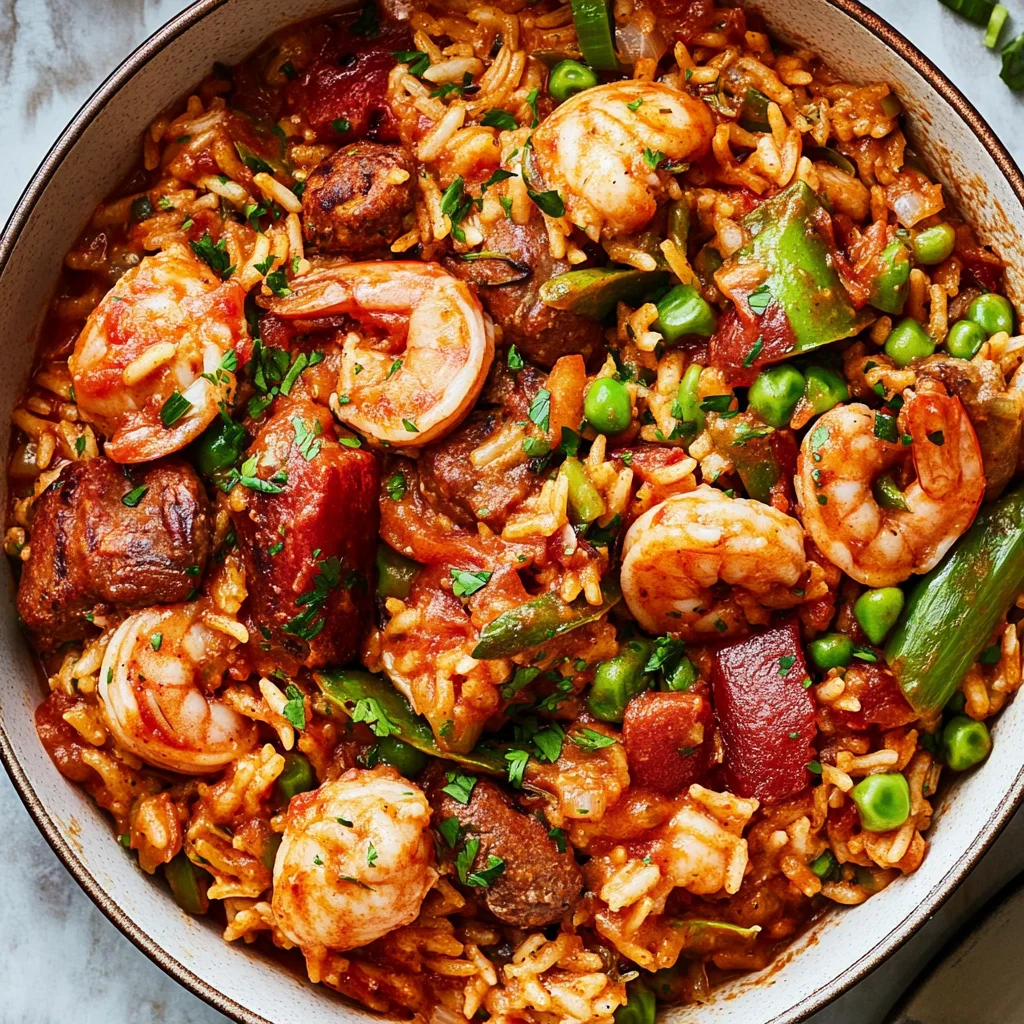
And boy, was it worth all those trials! The final result is nothing short of spectacular—a flavorful and hearty jambalaya packed with juicy shrimp, smoky sausage, and tender chicken that makes your taste buds dance with joy. It’s got that perfect medley of textures: creamy rice with a slight bite from the veggies and a kick of spice that keeps you coming back for more. I’m so excited for you to dive into this recipe—trust me, your taste buds are going to thank you as much as mine do!
These Best Jambalaya Recipe for Mardi Gras are…
…a celebration of flavors that will transport you straight to the heart of Mardi Gras!
1. They deliver an explosive flavor profile that’s the hallmark of a true jambalaya. The combination of succulent chicken thighs, smoky andouille sausage, and sweet shrimp creates a symphony of taste that dances on your palate, enhanced by the bold Cajun seasoning that adds depth and warmth.
2. Expect a luxurious texture with every bite – tender chicken thighs, juicy shrimp, and plump sausage slices all meld together beautifully with the perfectly cooked rice. The rice absorbs the rich broth, resulting in a dish that is both hearty and satisfying, ensuring each forkful is a delightful experience.
3. This recipe showcases a time-honored technique of layering flavors by sautéing the proteins before simmering them with rice and broth. Browning the chicken and sausage first builds a foundational richness that elevates the entire dish, making it far superior to standard recipes that skip this crucial step.
4. It’s an incredible value meal, especially when you consider that this jambalaya can easily feed a crowd at a fraction of the cost of dining out. With just three types of protein, you’re getting restaurant-quality flavors right at home without breaking the bank.
PS This jambalaya recipe yields enough to feed 6-8 people comfortably, making it perfect for gatherings or festive celebrations!
Ingredients for the Best Jambalaya Recipe for Mardi Gras
Each ingredient in this dish plays an essential role in flavor and texture. Here’s what you’ll need:
- 1 lb chicken thighs (boneless, skinless, diced): Provides tender pieces that absorb the spices beautifully.
- 1 lb andouille sausage (sliced): Adds a smoky depth and a hearty bite to the jambalaya.
- 1 lb shrimp (peeled and deveined): Delivers a sweet ocean flavor that complements the spices perfectly.
- 1 cup onion (chopped): Offers a foundational sweetness and aromatic base.
- 1 cup green bell pepper (chopped): Contributes a crisp, slightly bitter note that balances the dish.
- 1 cup celery (chopped): Brings a fresh crunch and enhances the overall texture.
- 3 cloves garlic (minced): Infuses the dish with a rich, savory aroma.
- 2 cups long-grain rice (uncooked): Serves as the hearty base that soaks up all the delicious flavors.
- 4 cups chicken broth: Adds moisture and depth, enriching the overall taste of the jambalaya.
- 1 can diced tomatoes (14.5 oz): Introduces acidity and juiciness, brightening the dish.
- 2 tbsp Cajun seasoning: Imparts a robust blend of spices that defines this classic recipe.
- 1 tsp thyme (dried): Offers an earthy note that complements the meat and vegetables.
- 1 tsp bay leaf (whole): Enhances flavor with its subtle herbal aroma during cooking.
- 2 tbsp olive oil: Provides a smooth richness that helps everything cook evenly.
- 1 cup green onions (sliced, for garnish): Adds a fresh, crisp finish to each serving.
- 1 cup parsley (chopped, for garnish): Brightens up the dish with color and freshness.
You Absolutely Must Brown the Proteins! Trust Me on This!
I know, I know—browning the chicken and sausage before adding them to the pot might feel like an extra step you could skip. I tried to cut corners once, thinking maybe it wouldn’t make a huge difference. Spoiler alert: I was wrong. The flavor was flat, and I ended up regretting my shortcut because the rich depth that browning brings is simply irreplaceable.
When you brown the proteins, those lovely caramelized bits cling to the bottom of your pot, creating what’s known as fond. This is where all the magic happens! Just like how a perfectly seared steak tastes infinitely better than a boiled one, browning your chicken and sausage enhances their flavor and adds a beautiful depth to your jambalaya. If you want that satisfying umami punch in every bite, this step is non-negotiable!
What does browning the proteins do?
- Flavor — Browning creates a deep, rich taste that elevates your jambalaya far beyond just “tasty.”
- Texture — The exterior of the chicken and sausage becomes crispy while staying juicy inside, providing a delightful contrast.
- Aroma — The Maillard reaction releases intoxicating aromas that will have everyone flocking to your kitchen.
- Color — It gives a beautiful golden-brown hue that makes your dish visually appealing.
- Complexity — Adds layers of flavor that can’t be achieved with just seasoning; it’s like adding an invisible ingredient.
Different browning times
- 1 minute (minimal impact) — Protein is barely cooked; no significant flavor development.
- 3 minutes (good) — Starts developing some color and flavor but lacks depth.
- ⭐️ 5 to 7 minutes⭐️ — Ideal! You’ll achieve that perfect balance of crispy outside and juicy inside, with rich flavors.
- Beyond 10 minutes (risk of drying) — Great color but can lead to overcooked protein if not monitored closely.
Don’t make the common mistake of rushing this step! If you skip browning or don’t let it cook long enough, you’ll end up with bland protein that won’t hold its own against the bold spices in your jambalaya. So please, take the time—your taste buds will thank you later!
How to make Best Jambalaya Recipe for Mardi Gras

Are you ready to see how straightforward it is to make the Best Jambalaya Recipe for Mardi Gras of your dreams??
1. PREPARE THE INGREDIENTS
Let’s get everything prepped so we can dive right into cooking!
1. Chop – Start by chopping the onion, green bell pepper, celery, and garlic. You’ll want them nice and small so they sauté evenly and infuse their flavors throughout the dish. Next, dice the chicken thighs into bite-sized pieces and slice the andouille sausage into rounds.
2. Peel and devein – If your shrimp aren’t already peeled and deveined, take care of that now. This step makes them ready to cook and ensures a pleasant eating experience without any shells.
HANDY TIPS
- For extra flavor, consider marinating the diced chicken in a bit of Cajun seasoning for 30 minutes before cooking!
- Having everything chopped beforehand means you can focus on cooking without interruptions.
2. COOK THE PROTEINS
Time to bring some sizzle to the pot!
3. Heat – In a large pot, heat the olive oil over medium heat. Once hot, add the chicken and sausage to the pot. Cook them until they are nicely browned—about 5 to 7 minutes—stirring occasionally so they don’t stick.
4. Remove – Once browned, carefully remove the chicken and sausage from the pot and set them aside on a plate. This helps retain all those delicious juices for later!
HANDY TIPS
- Make sure not to overcrowd the pot; if necessary, do this in batches to achieve that golden brown color.
- Keep an eye on the heat; adjusting it as needed will prevent burning while ensuring a good sear.
3. SAUTÉ THE VEGETABLES
Let’s build that aromatic base!
5. Add – In the same pot where you cooked your proteins, add the chopped onion, bell pepper, celery, and minced garlic. Sauté them until they become softened and fragrant—approximately 5 minutes. This step is crucial as it builds flavor for your jambalaya.
HANDY TIPS
- Don’t skip on sautéing! This step caramelizes the vegetables and develops a rich depth of flavor.
- If you like a little kick, feel free to add some chopped jalapeños or hot sauce at this stage!
4. COMBINE AND COOK
We’re almost there!
6. Add – Pour in the chicken broth along with the diced tomatoes (including their juice), Cajun seasoning, thyme, and bay leaf into the pot. Stir well to combine all those beautiful flavors.
7. Bring to boil – Raise the heat slightly until it comes to a boil, then add in your long-grain rice. Give it another good stir before reducing the heat to low. Cover with a lid and let it simmer gently for about 20 minutes until most of the liquid is absorbed.
HANDY TIPS
- For perfectly cooked rice, avoid lifting the lid during cooking; this keeps steam trapped inside!
- If you want more texture, consider using half long-grain rice and half wild rice!
5. ADD SHRIMP AND FINISH
The grand finale is here!
8. Stir in – After 20 minutes have passed, add in your shrimp along with the reserved chicken and sausage back into the pot. Cover again and cook for an additional 5–7 minutes or until your shrimp are pink and cooked through.
9. Remove bay leaf – Before serving up your jambalaya goodness, don’t forget to remove that bay leaf—it’s there for flavor but not meant to be eaten!
HANDY TIPS
- If you’re unsure if shrimp are done, look for that lovely pink color—they should also curl slightly when fully cooked!
- You can use frozen shrimp if fresh isn’t available; just ensure they’re fully thawed before adding them.
6. SERVE
Let’s make it look as good as it tastes!
10. Garnish – Serve up generous portions of jambalaya garnished with sliced green onions and freshly chopped parsley for a pop of color and freshness before digging in!
What an incredible dish you’ve just created! You’ve combined savory proteins with aromatic vegetables and spices that dance together beautifully in this classic jambalaya—a perfect tribute for Mardi Gras festivities! Make this once, and I wager it will invade your dreams every night too! – Nagi x
FAQ – Best Jambalaya Recipe for Mardi Gras
How long will leftover jambalaya keep in the fridge? 🥡
Leftover jambalaya will keep well in the fridge for up to 3-4 days. I’ve tested it, and I found that it maintains about 90% of its flavor on day 3, but by day 4, you’re looking at a drop to around 80% as the freshness wanes. To store, place it in an airtight container to avoid any unwanted odors from other foods. When reheating, make sure to heat it thoroughly until it’s steaming hot throughout.
Can I prepare this jambalaya ahead of time? ⏰
Absolutely! You can make this jambalaya a day in advance and store it in the fridge. Just keep in mind that the rice may absorb some of the moisture overnight, so I recommend adding a splash of chicken broth when reheating. If you want to freeze it, cool completely before transferring it to freezer-safe containers. It will last for up to 3 months in the freezer. To reheat, thaw overnight in the fridge and then warm on the stovetop or microwave.
🌾 Is there a way to make jambalaya gluten-free?
Yes, you can easily make this jambalaya gluten-free! The main ingredient to watch out for is the sausage; ensure you choose a certified gluten-free andouille sausage. Most Cajun seasonings are naturally gluten-free, but it’s always wise to double-check labels just to be safe. With these adjustments, you’ll have a delicious gluten-free jambalaya that everyone can enjoy!
Can I substitute chicken with another protein? 🍗
Certainly! If you want to switch things up, chicken thighs can be substituted with boneless skinless turkey or even diced pork tenderloin for a different flavor profile. Just remember that cooking times might vary slightly depending on your choice of protein; turkey may take an extra few minutes compared to chicken. I’ve tried various combinations and found that each one brings its own unique twist while still being incredibly tasty!
Why do I need to sauté the vegetables before adding liquids? 🥕
Sautéing vegetables like onion, bell pepper, celery, and garlic before adding them to the pot is crucial for building flavor. This process allows them to caramelize slightly, enhancing their sweetness and overall taste. It’s a technique called “mirepoix,” which is foundational in many cuisines—trust me, skipping this step means missing out on deeper flavors!
Can I use brown rice instead of white rice? 🌾
You can use brown rice if you prefer a more nutritious option; however, you’ll need to adjust cooking times since brown rice takes longer to cook than white rice. Typically, you’ll want to simmer it for about 35-40 minutes instead of 20 minutes. Just be aware that this could change the texture slightly—brown rice has a chewier bite compared to long-grain white rice.
How can I customize my jambalaya with additional ingredients? 🌶️
The beauty of jambalaya is its versatility! Feel free to add other proteins like crawfish or even some diced ham if you’re feeling adventurous. You can also toss in additional vegetables such as corn or okra for extra texture and flavor. Just remember not to overload it too much; you want everything evenly cooked without turning into a mushy mess!
Troubleshooting
I will continue to add more to this Troubleshooting section as I start seeing questions coming through from people who have made the recipe.
Troubleshooting tips
“My jambalaya turned out too dry! 😩”
- You might have added too much rice. If your rice-to-liquid ratio is off, it can absorb more liquid than intended, resulting in a dry dish.
- Another possibility is that you cooked it too long after adding the rice, causing the moisture to evaporate. Cooking times are key!
- I bet it was still YUM though!
“My shrimp ended up rubbery and tough!” 🦐
- Overcooking the shrimp is the most likely culprit. Shrimp only need about 5-7 minutes to cook through, so if they were in the pot too long, they became chewy.
- If your heat was too high while cooking, that could also lead to overcooking. Always keep an eye on them!
- I bet they were still YUM though!
“The chicken and sausage didn’t brown properly!” 🔥
- If your pot was overcrowded when cooking the chicken and sausage, they might steam instead of brown. Make sure there’s enough space for them to sear nicely.
- Not preheating your oil sufficiently can also prevent that lovely golden color from forming. A hot pot is essential for browning!
- I bet they were still YUM though!
“My jambalaya looks pale and unappetizing!” 😬
- This can happen if you didn’t sauté the vegetables long enough before adding the liquids. They need some time to develop flavor and color.
- Using low-quality or less flavorful Cajun seasoning can also dull the overall appearance and taste of your jambalaya. A good seasoning is crucial!
- I bet it was still YUM though!
Best Jambalaya Recipe for Mardi Gras
Ingredients
Method
- Chop the onion, green bell pepper, celery, and garlic. Dice the chicken and slice the sausage.
- Peel and devein the shrimp if not already done.
- In a large pot, heat olive oil over medium heat. Add the chicken and sausage, cooking until browned, about 5-7 minutes.
- Remove the chicken and sausage from the pot and set aside.
- In the same pot, add the chopped onion, bell pepper, celery, and garlic. Sauté until softened, about 5 minutes.
- Add the chicken broth, diced tomatoes, Cajun seasoning, thyme, and bay leaf to the pot. Stir well.
- Bring to a boil, then add the rice. Reduce heat to low, cover, and simmer for 20 minutes.
- After 20 minutes, stir in the shrimp and return the chicken and sausage to the pot. Cover and cook for an additional 5-7 minutes, or until the shrimp are pink and cooked through.
- Remove bay leaf before serving.
- Garnish with sliced green onions and chopped parsley before serving.